
Medway's SEND reform plan says only 11.9% of EHCPs were issued on time in 2025. It aims to cut assessment requests to 660 a year and teach more children locally by 2029.
Only 11.9% of Education, Health and Care Plans in Medway were issued within the legal time limit in 2025. The figure is in Medway’s new plan for reforming support for children with special educational needs and disabilities (SEND).
The Local SEND Reform Plan goes to the council’s Cabinet on Tuesday 17 November. It was written by the council, NHS Kent and Medway and the local partnership. The Department for Education approved it in October.
Overview
- Children with a plan: 4,448, or 5.3% of pupils.
- On time: 11.9% of EHCPs were issued within statutory timescales in 2025.
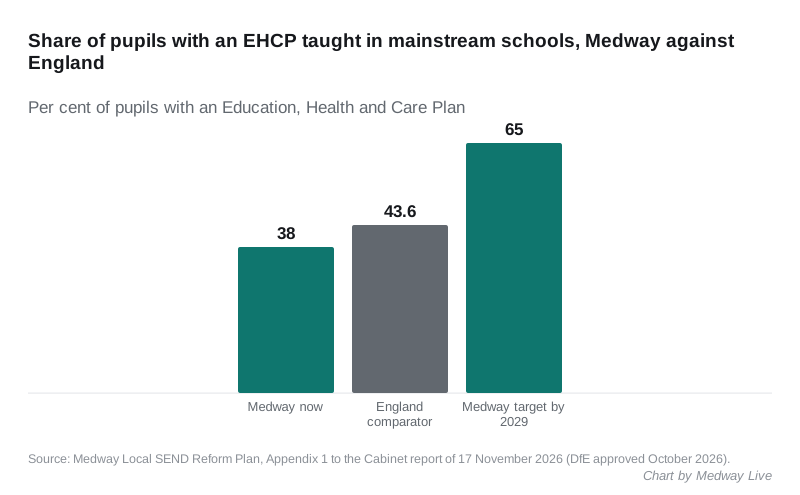
- Mainstream: 38% of pupils with an EHCP are in mainstream schools, against a national comparator of 43.6%. The target is 65% by 2029.
- Requests: assessment requests have doubled. The aim is 660 a year or fewer by 2029.
- Money: Medway expects a High Needs Stability Grant of about £16 million and has received £2,441,623 for a new “Experts at Hand” service.
What the plan says is going wrong
The plan sets out where the system is under strain. Requests for needs assessments have doubled and are forecast to pass 900 this academic year.
It lists these problems, found by the partnership’s own review and an external review by HMI:
- inconsistent inclusive practice from one school or setting to the next
- needs identified late
- more tribunals and more dissatisfied families
- more children with SEND being home educated
- shortages of educational psychologists and speech, language and occupational therapists
Attendance for pupils with SEND has fallen to 88.8% so far in 2025/26, the plan says. It adds that 64% of children in elective home education have special educational needs.
Experts at Hand
The centrepiece is a model called Experts at Hand. It sends specialist teams into schools, nurseries and colleges, so children can get advice and support without waiting for a statutory assessment.
The Cabinet report says Medway has already received £2,441,623 in ring-fenced grant for it. The money is for services schools cannot buy on their own, such as specialist health and education support. The aim is for at least 85% of settings to use it.
Cabinet is asked to let the Director of People decide how that grant is shared out, in consultation with the education portfolio holder.
The 2029 targets
By 2029, the Cabinet report says, the partnership wants:
- 660 or fewer requests for an EHCP assessment each year
- 65% of children and young people with an EHCP taught in mainstream settings
- 230 or fewer placements in independent special schools
- attendance above 94% for children on SEND Support
- fewer complaints, mediation cases and tribunals
The plan says 11% of Medway’s placements are in independent special schools, against 6.4% nationally. The council wants more children taught close to home.
Why the money matters
The report says demand is putting the council’s high needs budget back under pressure. Medway had cleared its in-year deficit on that budget, but “this new surge in demand” is “likely to reverse that position”.
The £16 million grant is meant to help councils deal with historic deficits while reforms take hold. Receiving it is linked to delivering the plan.
The report rates continued growth in demand and staff shortages as its biggest risks. Workforce shortages are rated “very likely” with a “critical” impact.
What scrutiny councillors said
The Children and Young People Overview and Scrutiny Committee discussed the plan on 1 October. Members were told that placement decisions would still be based on each child’s needs. The report says specialist provision “would remain essential” for children with the most complex needs.
What it means for you
Nothing changes overnight for a child who already has an EHCP. The plan is about how support is organised from now to 2029.
If you disagree with a decision about your child’s support, the plan promises a new early resolution route. It is meant to give quicker access to independent advice from SENDIASS, the SEND information and advice service, and to mediation, before a case reaches tribunal. Medway Parent Carer Forum helped write the plan.
Have your say