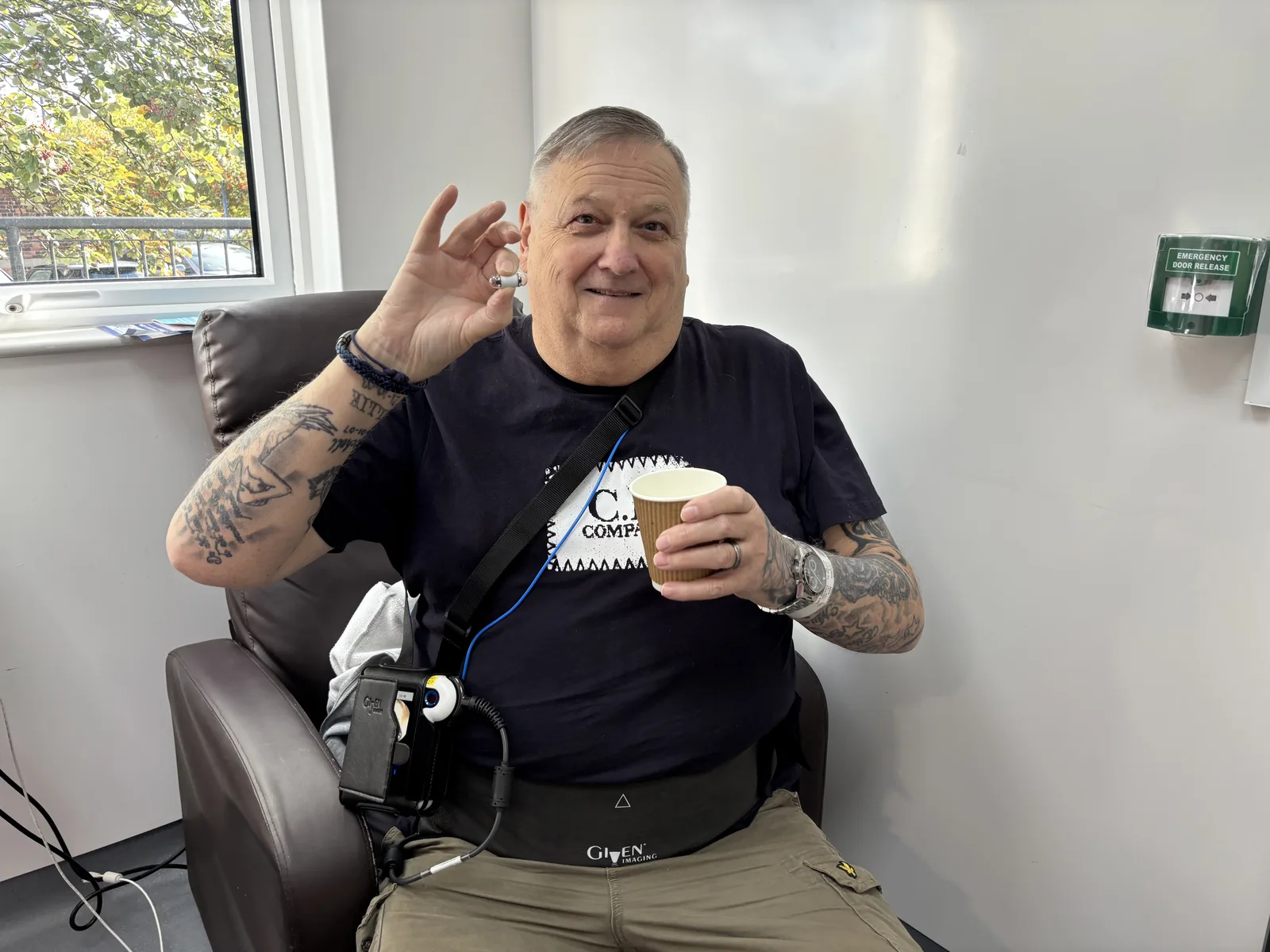

Some Medway patients can now swallow a camera the size of a vitamin tablet instead of having a colonoscopy. GPs can refer suitable patients to Medway Maritime Hospital directly.
Patients with possible bowel cancer symptoms can now be checked at Medway Maritime Hospital by swallowing a tiny camera. It replaces a colonoscopy for those who are suitable.
The first patient swallowed the capsule on Wednesday 28 October, when the service started at the Gillingham hospital. GPs can refer suitable patients for the test directly. (Medway NHS Foundation Trust, 2 November 2026)
How the test works
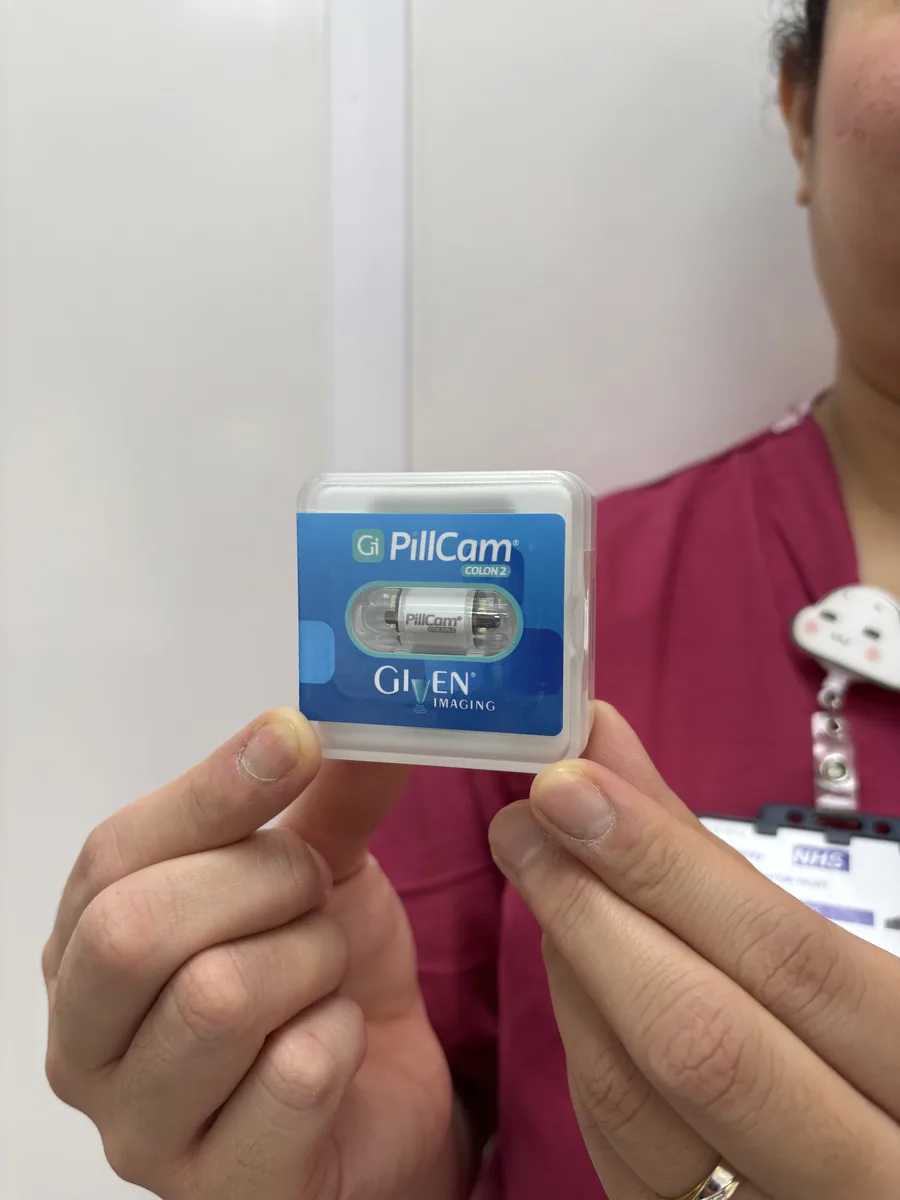
The test is called colon capsule endoscopy. The trust describes it like this:
- the camera is a capsule no bigger than a standard vitamin tablet
- it takes five to eight hours to pass through the body, taking two pictures a second
- the patient wears a data recorder around the waist and can go about a normal day
- staff then download the pictures and check them for signs of cancer and other conditions, such as Crohn’s disease
- once the capsule has passed through, it can be flushed away
A colonoscopy, the usual test, passes a thin tube with a camera through the bottom into the bowel. It can need sedation and a few hours in hospital, the trust said.
What the first patient said
Mark Freeman, 65, from Walderslade, was the first to have the test. He had a colonoscopy four years ago.
“Not only did I have to be sedated for it I was also in hospital for six hours,” he said. “Whereas with the camera, the procedure from start to finish took about an hour. Once I’d swallowed the capsule I was also able to go home and carry on with my normal day which was just fantastic.”
Why the hospital is using it
The trust expects the capsule to cut waiting times for diagnostic tests and help find bowel cancer earlier.
James Hatfield, the trust’s head of nursing for specialist medicine, said: “This technology offers a less invasive alternative, allowing patients to continue much of their normal day while the capsule captures detailed images of the bowel.”
The trust has not said how many patients it expects to test, or how it decides who is suitable.
What it means for you
- You cannot ask the hospital for the test directly. Your GP decides whether to refer you, and whether the capsule suits you rather than a colonoscopy.
- If you have symptoms that could be bowel cancer, see your GP now. The NHS lists blood in your poo, pooing more or less often than is usual for you, and tummy pain or a lump among the signs to get checked. (NHS: bowel cancer symptoms)
- The NHS screening kit is separate. People aged 50 to 74 are offered a home test kit every two years, and the return postage is free. (NHS: bowel cancer screening)
Have your say