
Seven of Medway's 20 secondary schools published a school-wide GCSE figure for 2026, and the council published none. What each one said, and the fair benchmark.
GCSE results came out on Thursday 20 August. Four days on, seven of Medway’s 20 state secondary schools have published a school-wide figure for how their Year 11s did. Three more put out a statement with no overall number in it. Ten have published nothing about this summer’s GCSEs at all.
Medway Council has published nothing either. Its schools and learning news page carries a good luck message dated 13 August and no results since.
That matters more than it sounds. There is no official Medway-wide GCSE figure to fall back on. Ofqual’s summer 2026 data tables publish results by region and by type of school, but no local authority breakdown at all. Validated school-level data does not arrive until the Department for Education performance tables later in the year. Until then, what a school chose to say about itself is the whole public record.
We checked all 20 schools on Sunday 24 August, working from the Department for Education’s register of schools, which gives each one’s official website address.
What each school published
Published a school-wide figure
- Sir Joseph Williamson’s Mathematical School (grammar, boys, Rochester). The most detailed release in Medway by some distance. It reported 56% of all grades at 7 to 9 and 35.05% at 8 to 9, both up on last year; an average grade of 6.76 per course; 96.3% of students at grade 5 or above in both English and maths and 99.1% at a standard pass in both; 66.98% of maths grades and 59.07% of English grades in the 7 to 9 band; and an Attainment 8 score of 69.25.
- The Rochester Grammar School (grammar, girls). 52% of all grades at 7 and above, with almost a third at grade 8 and above.
- Holcombe Grammar School (grammar, boys, Chatham). 30% of grades at 7 or above and over 75% at grade 5 or above. Over half of grades were at 7 or above in chemistry, physics and PE, and over 40% in maths, where 16 students got a grade 9.
- Leigh Academy Hundred of Hoo (non-selective). Over 60% of grades at 4 or above and nearly 40% at 5 or above. The academy led on its best-ever results for students with SEN and disadvantaged students.
- Leigh Academy Rainham (non-selective). This was the school’s first ever GCSE cohort. It reported 218 outcomes at grade 7 to 9 or equivalent, 79% of students at grade 4 or above in English, 98% at 4 or above and 35% at 7 or above in art from a cohort of 48, and EBacc entry of 76.3% against a national 40.5%.
- St John Fisher Catholic Comprehensive School (non-selective, Rochester). An average grade of 4, with 55% of students achieving grade 4 in both English and maths and 31% achieving grade 5 in both.
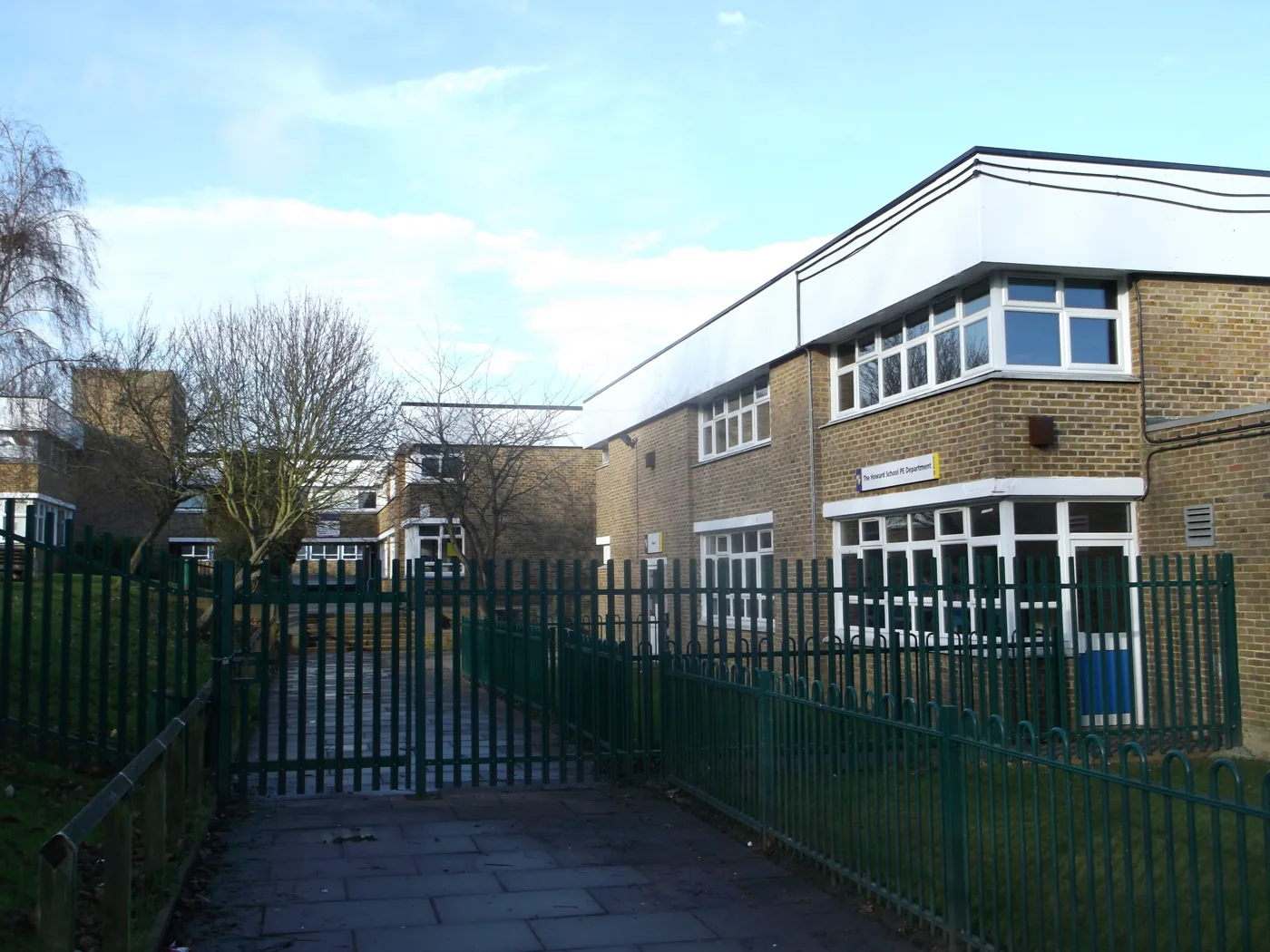
- The Howard School (non-selective, boys, Rainham). 300 grades at 7 to 9, of which 30 were grade 9s, and what the school calls the highest overall GCSE attainment in its history.
Published a statement, but no school-wide number
- The Victory Academy (Chatham) said it achieved its highest ever proportion of grade 7 and above without giving the proportion. It did publish subject figures: over 42% at 7 or above in chemistry, 35% in Spanish, 95% at grade 5 or above in physics, and 100% at 4 or above in French and dance.
- Leigh Academy Strood announced record-breaking results and listed individual pupils’ grades, but no cohort figure.
- Rainham School for Girls published a results day news item with no figures. A post from the school’s own social feed, embedded on its homepage, claims its best overall performance on record, more grade 8s and 9s than ever before, and over 300 top grades across GCSE and BTEC.
No 2026 GCSE figures on their own website when we checked
Brompton Academy, Chatham Grammar, Fort Pitt Grammar School, Greenacre School, Maritime Academy, Rainham Mark Grammar School, The Robert Napier School, The Thomas Aveling School, Walderslade School and Waterfront UTC.
Two of those are worth a note rather than a black mark. Rainham Mark Grammar School published a message from the head the day before results, inviting Year 11 in to collect them. Chatham Grammar’s exam results page set out the collection arrangements. Neither has followed up with outcomes. The Robert Napier School’s homepage still leads on its 2025 exam results, and Waterfront UTC’s most recent GCSE news post is dated 21 August 2025.
The benchmark most people use is the wrong one
Comparing any of these figures with “the national average” is where results coverage usually goes wrong.
The headline national figure for 2026 is 67.0% of GCSE results at grade 4 or above, and 21.8% at grade 7 or above. That is Ofqual’s England all-ages row, and it includes hundreds of thousands of resits taken at colleges. A Year 11 cohort in a Medway school contains none of that.
Here is the ladder, all from the same Ofqual workbook:
| Benchmark | Grade 7+ | Grade 4+ |
|---|---|---|
| England, all ages | 21.8% | 67.0% |
| England, 16-year-olds only | 23.1% | 70.7% |
| South East, all ages | 24.5% | 69.9% |
| South East, 16-year-olds only | 25.8% | 73.2% |
Medway is in the South East, so the bottom row is the closest fair comparison for a Year 11 group.
Even that is not right for a selective area. Ofqual’s table 20 splits results by type of centre instead, and the gaps are enormous:
| Type of school | Grade 7+ | Grade 4+ |
|---|---|---|
| Grammar schools | 63.2% | 97.4% |
| Independent schools | 47.1% | 88.4% |
| Free schools | 21.7% | 68.2% |
| Local authority comprehensives | 20.1% | 68.6% |
| Academies | 19.7% | 68.2% |
| Secondary modern schools | 16.8% | 64.9% |
| All state-funded | 20.6% | 66.1% |
This is the table that matters in Medway, because Medway is a fully selective area. Six of its 20 secondaries are grammar schools, and the council’s own admissions pages say the Medway Test is designed to select 23% of the year group as suitable for grammar school.
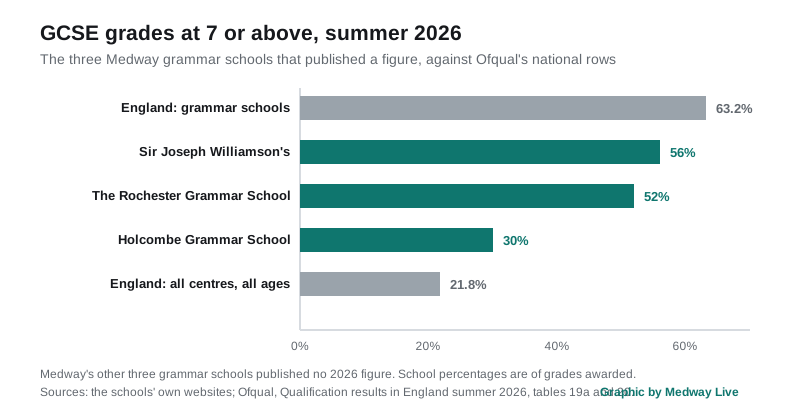
Set against that grammar-school row of 63.2%, none of the three Medway grammars that published a figure reaches it. Set against the all-centres figure of 21.8%, all three clear it comfortably. Both statements are true, which is exactly why the choice of benchmark decides the story.
Ofqual attaches a warning to that table which is worth repeating. Centre type is self-reported by schools from a single list, so “the accuracy of table 20 below depends on how accurately schools and colleges have classified themselves”. The grammar row also mixes grammar schools in wholly selective districts like Medway with grammar schools in otherwise comprehensive areas.
Why you cannot rank these schools against each other
The seven Medway figures above are not on a common basis, and lining them up in a league table would be misleading. Specifically:
- Some report the percentage of grades, some the percentage of students. St John Fisher’s 55% is students who got grade 4 in both English and maths. Sir Joseph Williamson’s 56% is grades at 7 to 9.
- The Howard School published a count, 300 grades at 7 to 9, not a percentage. Without the number of entries behind it, that count cannot be turned into a rate.
- Six of the schools are selective and 14 are not. Some are single sex.
- Thresholds differ. Holcombe reported at grade 5 and above, Hundred of Hoo at 4 and above and 5 and above, Rochester Grammar at 7 and above and 8 and above.
There is also no official comparator for some of the numbers schools like to quote. Ofqual’s 2026 tables publish grade 7 and above and grade 4 and above only. There is no England-wide percentage at grade 9, and none at grade 5 and above, for any region or centre type.
What it means for you
If your child’s grade looks wrong, the clock is already running. JCQ’s post-results services for summer 2026 close on Wednesday 24 September for both a clerical re-check and a review of marking. Three things families regularly get wrong:
- The priority service does not cover GCSE. It is for A level, AS and Level 3 vocational qualifications only. There is no faster GCSE route.
- You cannot apply yourself. Requests go through the school’s exams officer, who submits them to the awarding body, and written student consent is needed first.
- Grades can go down. JCQ requires that candidates be told their marks and grades “could go down as well as up”.
Turnaround is 10 calendar days for a clerical re-check and 20 for a review of marking.
If you are choosing a secondary school this autumn, treat this summer’s publicity with care. Applications for September 2027 entry run through the autumn, and the validated performance data covering these results will not be published for months. A school that stayed quiet in August is not necessarily a weaker school. It may simply not run a press operation.
If your child is resitting English or maths, the November 2026 GCSE series is the next opportunity, and entries are made through the school or college rather than by parents.
Sources
- Ofqual, Qualification results in England: summer 2026, data tables updated 20 August 2026, tables 19a, 19b and 20
- Department for Education, Get Information About Schools, register of open Medway secondary schools, downloaded 24 August 2026
- Individual school websites, each linked above, checked 24 August 2026
- JCQ, post-results services
- Medway Council, About the Medway Test and schools and learning news
Have your say